
How Do I Check Whether an E-Bike Is Road-Legal in the UK?
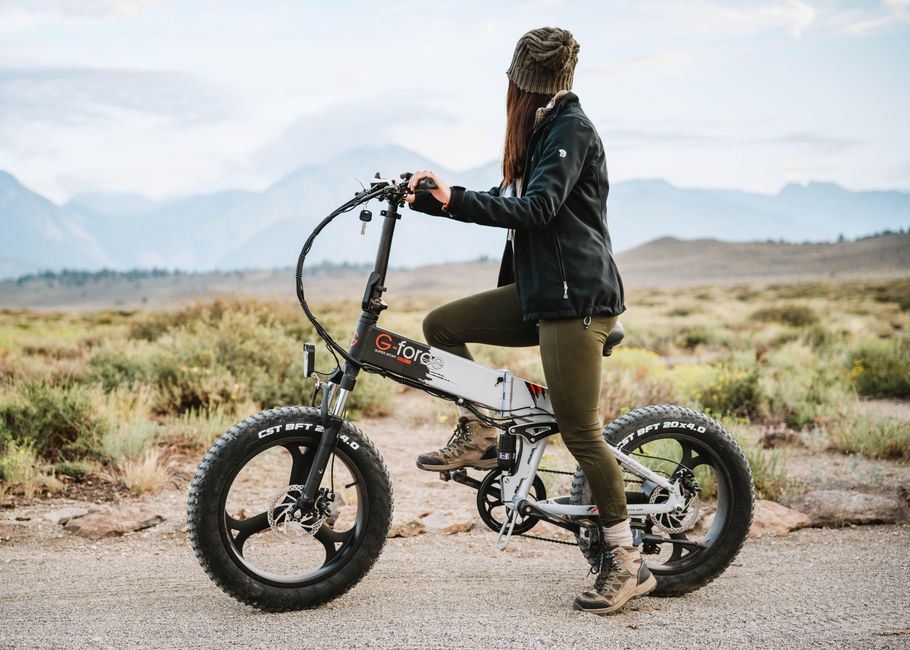
In the UK, an adult e-bike is a road-legal electrically assisted pedal cycle (EAPC) only if it has usable pedals, a motor rated at no more than 250W continuous power, and assistance that stops above 15.5 mph. If it fails any of those tests, it is legally a moped or motorcycle and brings registration, tax, insurance, licence and helmet requirements.
The puzzle is that an e-bike can be offered openly for sale yet still be unsuitable for ordinary public-road riding. Transport for London states this directly: many e-bikes and conversion kits sold online and in shops are not legal to ride on UK roads. The practical buying rule follows from that distinction: assess the machine's legal specification, not its marketing label.
Do I need a licence or insurance for an electric bike in the UK?
No, if the electric bike is a compliant EAPC and you are at least 14 years old. According to GOV.UK's electric bike rules, a qualifying EAPC does not need a driving licence, registration, vehicle tax or insurance.
By contrast, an electric bike outside the EAPC definition is classed as a motorcycle or moped. The distinction is legal rather than cosmetic: GOV.UK says the rider then needs a valid licence, insurance, registration, tax and a British-standard motorcycle helmet. A bicycle-shaped frame does not preserve bicycle rules when the motor specification does not qualify.
| Machine status | What the rider needs for public-road use |
|---|---|
| Compliant EAPC | No licence, registration, vehicle tax or insurance; rider must be at least 14 |
| Non-compliant e-bike treated as a moped or motorcycle | Registration, tax, insurance, an appropriate licence and a British-standard motorcycle helmet |
This is also why a buyer should resist treating performance claims as harmless extras. An apparently small specification difference changes the whole regulatory category.
Is a 500W e-bike legal on UK roads?
No, a 500W e-bike is not a compliant EAPC for UK road use under the current rules. The legal ceiling is 250W maximum continuous rated power, as set out by the Driver and Vehicle Standards Agency and Department for Transport information sheet.
The source of much confusion is a 2024 consultation. The Department for Transport proposed increasing the EAPC limit from 250W to 500W, but then decided not to take those proposals forward. A proposal is not a rule; the applicable EAPC threshold remains 250W continuous rated power.
Read “continuous rated power” carefully. It is the legal measurement used for EAPC classification, not a substitute for a retailer's vague power language. The safest response to an unclear listing is not to infer compliance from the product name, its appearance or an advertised top speed. Ask for the permanent marking and the underlying specification.
Can I legally ride an e-bike with a throttle in the UK?
Yes, but only in the limited circumstances that preserve EAPC compliance or where the required vehicle approval has been obtained. GOV.UK explains that a bike able to propel itself up to 15.5 mph without pedalling, including a twist-and-go model, needs vehicle approval; the manufacturer or importer should have secured it, and the bike should show an approval number.
The date and the throttle's behaviour matter. The Department for Transport states that a twist-and-go EAPC placed on the market or entering service after 1 January 2016 needs technical approval for road use. TfL further distinguishes walk assist, which must cut out at 3.7 mph, from faster no-pedalling propulsion.
A throttle therefore requires a precise question: does it merely provide permitted low-speed walk assistance, or does it propel the bike without pedalling? If it is the latter, do not accept a seller's assurance alone. Ask to see the approval number and documentation before treating it as road legal.
How do I check whether an e-bike is a legal EAPC before buying it?
Check the permanent product marking and the advertised specification before buying, then walk away from contradictions or missing evidence. GOV.UK requires a buyer-facing plate or durable marking that shows the manufacturer and maximum continuous rated motor output, plus either the battery voltage or the maximum motor-propelled speed.
| Check | What a compliant EAPC should show or do | What should stop the purchase |
|---|---|---|
| Pedals | Pedals capable of propelling the bike | No usable pedals or a machine presented as a bike without this function |
| Motor rating | Maximum 250W continuous rated power | A 500W rating or no clear continuous-power figure |
| Motor assistance | Assistance cuts out above 15.5 mph | Assistance beyond that speed or a de-restriction claim |
| Throttle | Appropriate approval evidence if it self-propels up to 15.5 mph without pedalling | No approval number or documentation for a qualifying twist-and-go model |
| Conversion or second-hand history | Evidence of compliance, safety instructions and suitable brakes | Unknown modifications, missing paperwork or an off-road-only claim |
The Department for Transport's battery-safety guidance adds several useful checks for conversion kits: obtain the machinery-product declaration of conformity, full safety instructions and confirmation that the brakes are suitable. It also warns that second-hand, refurbished and converted e-bikes can be difficult to verify for authenticity and compliance, and advises looking for CE or UKCA marking.
Off-road mode deserves blunt treatment. The Department for Transport says that a feature permitting motor propulsion beyond 15.5 mph means the vehicle does not comply with EAPC regulations and is considered a motor vehicle. Removing a restriction after purchase does not create a private exception; modifying an e-cycle past the power or assistance limits turns it into an unregistered motorbike in law.
The buyer's decision can therefore be reduced to documentary evidence: pedals, 250W continuous power, a 15.5 mph assistance cut-off, durable markings, and approval evidence where a self-propelling throttle is involved. If a listing cannot establish those facts, it has not established that the bike is a road-legal EAPC.
Frequently Asked Questions
Can I use an off-road mode e-bike on public roads?
No. The Department for Transport considers a machine with an off-road mode that allows motor propulsion above 15.5 mph to be a motor vehicle rather than an EAPC. TfL also says off-road e-bikes may only be used on private land without unrestricted public access, with the landowner's explicit permission.
What happens if my e-bike exceeds the 15.5 mph assistance limit?
It stops qualifying as an EAPC and is treated as a motor vehicle. Department for Transport guidance says a modified e-cycle beyond the legal limits becomes an unregistered motorbike in law; road use can lead to a fine, licence penalty points and impoundment, while insurance cover is unlikely.
Do imported e-bikes need a UK approval number?
Not every imported EAPC needs an approval number simply because it is imported, but a self-propelling twist-and-go machine within the relevant category needs vehicle approval for road use. GOV.UK says the manufacturer or importer should have obtained it and the bike should display an approval number; without manufacturer type approval, an importer or individual can apply for Motorcycle Single Vehicle Approval.
Sources
- GOV.UK: Electric bike rules
- Driver and Vehicle Standards Agency and Department for Transport: Electrically assisted pedal cycles in Great Britain
- Department for Transport: Battery safety for e-cycle users
- Transport for London: E-bike safety
- Department for Transport: Proposed EAPC legislation changes outcome