
Can a Small Wind Turbine Produce Enough Electricity at My Home?
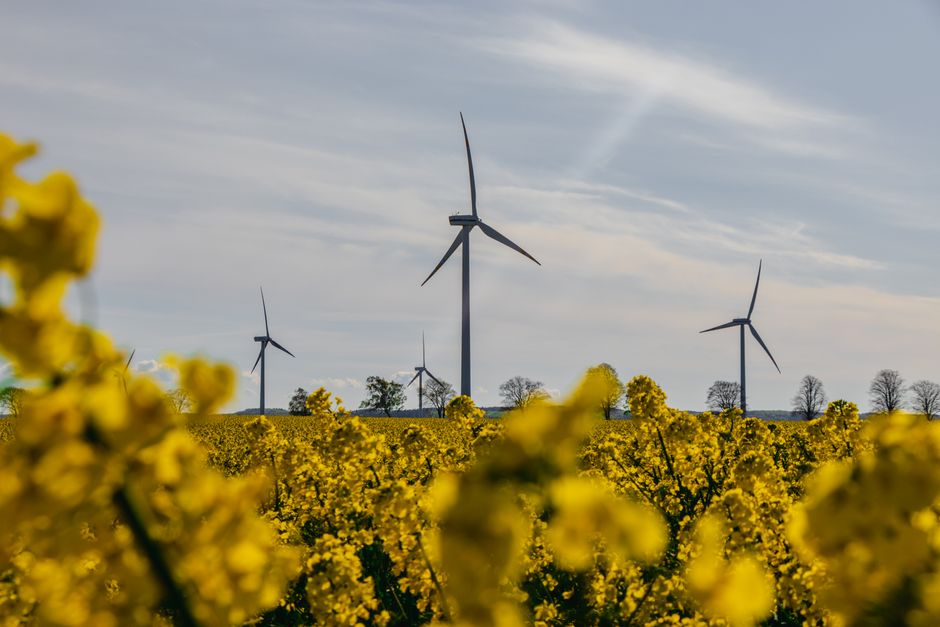
A small wind turbine can produce useful electricity at a home only if the site has strong, reasonably unobstructed wind and enough room for a properly mounted tower. Start with local wind data, then estimate annual energy using the turbine’s power curve at the planned hub height; a map or rated capacity alone cannot tell you what your property will produce. Compare that estimate with your electricity use, installation costs, and backup needs before deciding.
How much electricity can a small wind turbine produce at my house?
A small wind turbine’s output depends on the wind at its site and height, so its rated kilowatts are not a forecast of your annual electricity. The U.S. Department of Energy (DOE) says a typical U.S. home uses about 10,649 kilowatt-hours (kWh) per year, or 877 kWh per month, but actual household use varies.
DOE gives a useful illustration: a 1.5 kW turbine can meet 300 kWh per month at a site with an annual average wind speed of 14 miles per hour. That example is tied to the specified wind conditions; it is not a promise that the same turbine will produce that amount at another property. DOE’s Small Wind Guidebook says, “The best measure of wind turbine performance is annual energy output.”
Wind speed changes the answer sharply. The guide’s power formula raises wind speed to the third power, so a modest change in wind can make a large difference in available power. The practical estimate is annual energy from the specific turbine’s power curve, adjusted for hub-height wind, wind distribution, and site conditions—not a simple multiplication of the turbine’s kilowatt rating.
The National Renewable Energy Laboratory (NREL) describes the work behind a credible estimate: adjust wind data for topography, wind shear, obstacle-related wind shade, and turbulence, then apply the adjusted wind distribution to the turbine’s power curve to estimate gross and net annual energy. NREL reports turbulence can reduce estimated annual output by 15%–25% at typical small-turbine sites compared with power-curve test conditions. That is why an open, elevated tower site can outperform a more convenient but sheltered mounting point.
For a first pass, use DOE’s residential wind maps to screen the area. The 30-meter maps estimate average annual wind speed using weather data and computer modeling. DOE notes small wind projects are typically installed at 15–40 meter hub heights in areas with average annual wind speeds around 4 meters per second or greater. A map is a screen, not a property-specific production estimate. Match the planned hub height and turbine to a site assessment.
How windy does my property need to be for a wind turbine to work?
As a starting screen, DOE says a prospective homeowner should generally have at least one acre and an average annual wind speed of at least 10 mph for residential wind. Its small distributed wind FAQ gives typical thresholds of 10 mph for grid-connected systems and 9 mph for stand-alone systems, alongside suitable local codes and utility interconnection terms. These are screening conditions, not guarantees of worthwhile output.
Use the DOE threshold to decide whether to investigate further, not to approve a purchase. Resource estimates from maps, nearby weather stations, airport data, existing projects, or modeled data can help narrow the question. NREL says on-site measurements are preferable when justified, and its site-assessment process evaluates the adjusted wind distribution against the proposed turbine’s power curve.
Obstacles matter as much as the regional average. DOE’s siting rule of thumb is to put the bottom of the rotor at least 30 feet above obstacles within 300 feet. The agency also notes that taller towers can reach stronger, less turbulent wind; residential wind towers are typically 60–140 feet high, with height selected in relation to nearby buildings and vegetation. Those dimensions make zoning, setbacks, and permitting an early check, not a last-minute detail.
Before requesting a final estimate, make a site checklist: identify trees and buildings near the tower location, find the planned hub height, check local land-use and height rules, and ask the utility about interconnection requirements. NREL’s guidelines treat land use, turbine and tower options, economics, interconnection, permitting, and operations and maintenance as parts of one site assessment. The estimate is only useful if the project can actually be permitted and connected—or designed for stand-alone use.
Is a small wind turbine worth the cost compared with solar panels?
A small wind turbine is worth considering when a site assessment supports substantial annual production and the full installed cost fits the value of the electricity or backup it will provide. Compare a specific wind estimate with your own usage and a solar quote; neither technology has a universal payback period.
DOE reports a capacity-weighted average installed cost of $5,120 per kW for small-wind projects installed in 2021, based on 16 projects in three states. Separately, its consumer guide gives a broad residential small-wind installed-cost range of $10,000–$70,000, with zoning, permitting, and utility interconnection affecting the total. These figures describe different measures and should not be treated as a current quote for a particular property. DOE says payback depends on system cost, wind resource, electricity prices, and how the power is used.
For comparison, DOE’s consumer guide estimates residential solar PV at about $3 per watt installed: a 7 kW system is about $21,000 and can produce 20–35 kWh per day depending on climate. That is a guide estimate, not a quote or a direct production comparison with wind. The useful comparison is each system’s expected annual energy at your property, installed price, ongoing maintenance expectations, and how well its production matches your needs.
Mounting choice changes the calculation. DOE says rooftop turbines encounter more turbulence and vibration, which can cause noise, shorten turbine life, and reduce production; tower-mounted ground-connected systems are generally more cost-effective. A remote off-grid property also needs to include connection costs if grid extension is under consideration: DOE says extending a power line can cost $15,000 to more than $50,000 per mile, depending on terrain.
Wind output varies, so off-grid owners need a plan for periods when the turbine produces less. DOE identifies storage or a wind-and-solar hybrid system as options; it also notes that grid-connected systems may receive utility credits for excess generation depending on local rules. Before choosing, ask installers to show the estimated annual kWh, assumptions about hub-height wind and turbulence, total project cost, maintenance expectations, and any permitting or interconnection costs. A proposal that omits those inputs is hard to compare.
Frequently Asked Questions
Can I install a wind turbine on my roof?
A rooftop turbine may be possible where local rules allow it, but DOE notes that roof-level turbulence and vibration can increase noise, shorten turbine life, and reduce production. DOE generally describes tower-mounted, ground-connected systems as more cost-effective. Check local zoning and building requirements before choosing a rooftop unit.
How do I check whether trees or buildings block the wind on my property?
Begin with DOE’s wind maps as a preliminary screen, then identify nearby buildings and vegetation relative to the proposed tower and rotor. DOE’s rule of thumb is to place the rotor’s bottom at least 30 feet above obstacles within 300 feet. A site assessment should account for wind shade, turbulence, topography, and hub height; on-site measurements may be worthwhile when the resource is uncertain.
Your next move is straightforward: gather your annual electricity use, screen your location on DOE’s map, and ask for an estimate based on a specific turbine and hub height. Then compare its expected annual kWh and full installed cost with a solar proposal, including permitting, interconnection, and maintenance assumptions. Decide from the site estimate, not from the turbine’s advertised rating.
Sources
- U.S. Department of Energy, Small Wind Guidebook
- National Renewable Energy Laboratory, Small Wind Site Assessment Guidelines
- U.S. Department of Energy, Energy Saver Consumer Guide to Residential Renewable Energy
- U.S. Department of Energy, Maps and Data (WINDExchange)
- U.S. Department of Energy, Frequently Asked Questions on Small Distributed Wind Systems
Keep reading

How Do Common Physical Traits Get Inherited?
Learn how many genes, shuffled inheritance, and environmental influences shape traits such as eye color and height.
Why Is Shoulder Pain So Common, and What Do Studies Really Show?
A research-based guide to shoulder-pain prevalence, age and sex patterns, work exposures, and why scans cannot diagnose pain alone.

Can I Trust a Clinical-Study Headline for My Health Decision?
A practical framework for judging whether a clinical-study headline is reliable and relevant to your health decision.

Do Blueberry Studies Support Claims About Memory, Blood Pressure, Blood Sugar, and Exercise Recovery?
What blueberry trials really show about memory, blood pressure, blood sugar, and exercise recovery.