
Why Is Shoulder Pain So Common, and What Do Studies Really Show?
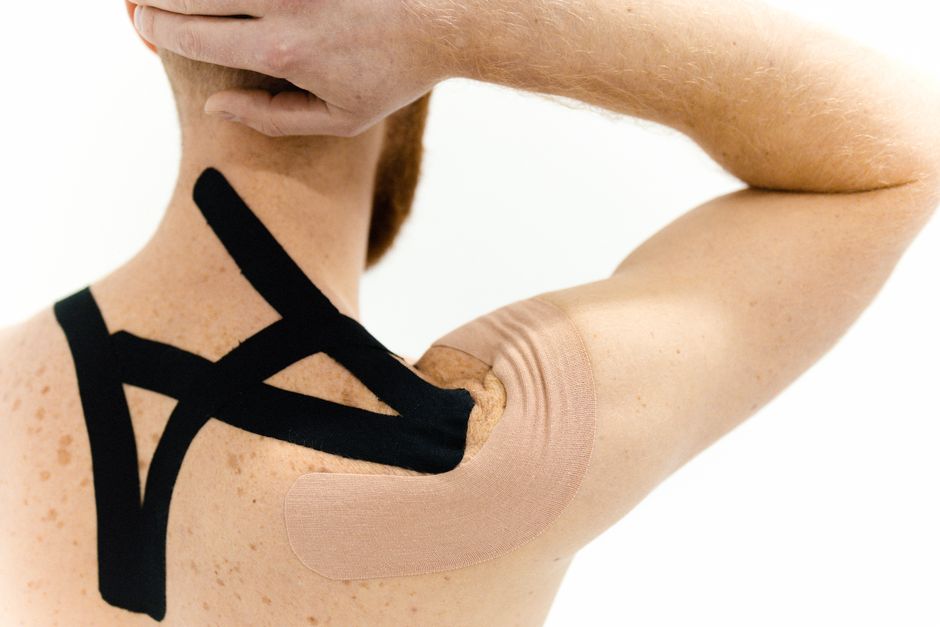
Shoulder pain is common because it is a symptom reported across many ages, jobs, and conditions, not one single disease: a global review found a median community prevalence of 16%. Rates generally rise after age 50 and are often higher in women, but population studies identify patterns, not the precise cause of pain in any one shoulder.
How common is shoulder pain in adults?
Shoulder pain is common in adults, although the headline number depends heavily on where, when, and how researchers ask the question. The BMC Musculoskeletal Disorders systematic review, which included 61 studies across high-, middle-, and low-income countries, reported a median community prevalence of 16%, with estimates ranging from 0.67% to 55.2%.
That spread is not a statistical curiosity. It is the central interpretive problem. A survey asking whether someone had shoulder pain over a long reference period will capture more people than one asking about current pain; the review found that longer symptom-reference periods generally produced higher prevalence. Studies also use different definitions of shoulder pain and draw from different populations. Combining their results into a single universal rate would create false precision.
Setting changes the answer as well. In the same review, primary-care prevalence ranged from 1.01% to 4.84%, with a median of 2.36%. A clinic record counts people who sought care; a community survey counts people who report symptoms whether or not they sought care. These are different measurements of the same broad problem, not competing estimates.
| Study setting or measure | Reported estimate | What it can describe |
|---|---|---|
| Community studies | Median 16.0%; range 0.67% to 55.2% | Self-reported shoulder pain in surveyed populations |
| Primary-care studies | Median 2.36%; range 1.01% to 4.84% | Shoulder pain recorded among people using primary care |
| Incidence studies | Median 37.8 per 1,000 person-years; range 7.7 to 62 | Newly reported cases over time |
The practical reading is blunt: shoulder pain is frequent enough to be ordinary, but “ordinary” does not mean trivial or diagnostically simple. Symptoms, a named shoulder diagnosis, and a scan finding are three different categories.
Why does shoulder pain become more common with age?
Shoulder-pain estimates generally increase after age 50, especially among people in physically active occupations, but age does not supply a diagnosis. The Archives of Physiotherapy systematic review found that 16 of 21 included studies reported higher estimates or odds ratios in older participants. Among physically active occupational samples, estimates rose after age 50 in 14 of 18 samples; only 2 of 4 sedentary samples showed that increase.
This pattern supports an interaction, not a one-line explanation. Age, work activity, and pain do not map neatly onto one another. The review explicitly cautions that degeneration may not itself cause pain and that activity can modify symptoms. An older worker with a painful shoulder and an older worker without symptoms can both have age-related structural changes.
The occupational-health evidence makes the same point from another direction. The Washington State Department of Labor & Industries shoulder guideline reports that more than half of people aged 60 years and older had partial or complete rotator-cuff tears in the cited studies, yet some had no symptoms or trauma history. A tear can be relevant; it is not automatically the explanation.
For daily prevention, the useful question is therefore not whether aging can be avoided. It cannot. The more useful question is whether a person’s work setup repeatedly places the arm in sustained or forceful positions. If desk work is part of that exposure mix, an ergonomic desk-and-chair setup in a small home office can help you examine posture and reach rather than treating every shoulder symptom as an inevitable consequence of age.
Is shoulder pain more common in women or men?
Across the studies reviewed globally, shoulder-pain estimates were generally higher in women than in men. In 25 studies from the BMC Musculoskeletal Disorders review, the median prevalence was 20.2% in women and 12.5% in men. That is a population pattern, not a rule for any individual, and the review’s broad range of definitions and settings still applies.
The right conclusion is narrower than a casual comparison suggests. Sex differences in prevalence do not tell you whether a particular person’s pain came from a tendon, joint, nerve, injury, work exposure, or another condition. They also do not establish why the difference appeared in every study. The data report a recurring difference in estimates; they do not settle a biological or social mechanism.
What occupational studies can establish
Occupational studies are stronger when they examine cumulative exposure. The Best Practice & Research Clinical Rheumatology review associates shoulder disorders with heavy lifting, pushing, pulling, carrying, overhead work, repetitive work, vibration, and awkward postures. It concludes that the evidence is most convincing for a cumulative effect of several mechanical exposures. A Finnish worker cohort cited in that review found an almost four-fold increased risk of a clinically diagnosed shoulder disorder lasting at least three months among workers exposed to three or more physical factors.
That finding does not turn a job title into a diagnosis. It says that a pattern of exposure is associated with higher risk in a group. It cannot determine whether one person’s shoulder pain was caused by work, whether it was caused by a specific task, or whether a structural finding predates the symptoms. Occupational history and clinical examination remain necessary.
Why imaging cannot close the case
An MRI describes anatomy; it does not directly measure pain. The Rheumatology community MRI study compared older adults with current pain, past pain, and no history of shoulder pain. Rotator-cuff tendinosis and tears appeared in the majority of participants in every group, and imaging pathology occurred in approximately equal proportions among those groups.
This is the counterintuitive result that makes population evidence valuable: abnormalities can be real without being the active driver of symptoms. The study also cites earlier research finding rotator-cuff tears in 34% of 100 asymptomatic people, with frequency increasing with age despite painless normal activity. An image should be interpreted beside symptoms, physical examination, and injury history, not promoted to a verdict on its own.
Population research is useful for calibrating expectations. It can show that shoulder pain is common, that estimates often rise after 50, that women often report higher prevalence, and that combined mechanical exposures merit attention. It cannot diagnose your shoulder. That boundary is not a weakness in the research; it is the distinction between studying patterns in groups and assessing a person.
Frequently Asked Questions
What jobs and activities increase the risk of shoulder pain?
Research links shoulder disorders to cumulative mechanical exposures: heavy lifting or carrying, pushing or pulling, overhead work, repetitive work, vibration, and awkward postures. The occupational review finds the evidence strongest when several exposures occur together, rather than when one task is considered in isolation. The Washington State guideline also identifies high-force, repetitive overhead motion in work such as welding, plate work, fish processing, machine operation, and carpentry as a chronic-overuse exposure.
Does an MRI finding explain why my shoulder hurts?
No. MRI and ultrasound can support a diagnosis, but an image alone cannot prove the source of pain. A community MRI study found rotator-cuff tendinosis and tears in most participants across groups with current pain, previous pain, and no shoulder-pain history; symptoms did not reliably match imaging findings.
When does shoulder pain need medical assessment?
The NHS advises medical assessment when pain is worsening, has not improved after two weeks, or makes shoulder or arm movement very difficult. Seek urgent assessment for sudden or severe pain, inability to move the arm, a deformed or badly swollen shoulder, persistent pins and needles or loss of sensation, temperature change in the arm, pain after a fall or accident, fever, or feeling unwell.
Sources
- BMC Musculoskeletal Disorders: A systematic review of the global prevalence and incidence of shoulder pain
- Archives of Physiotherapy: Shoulder pain prevalence by age and within occupational groups
- Best Practice & Research Clinical Rheumatology: Shoulder Disorders and Occupation
- Washington State Department of Labor & Industries: IIMAC Shoulder Guideline
- Rheumatology: Prevalence of abnormalities on shoulder MRI in symptomatic and asymptomatic older adults
- NHS: Shoulder pain