
Choose and Use a Crepe Maker Machine for Even Crepes
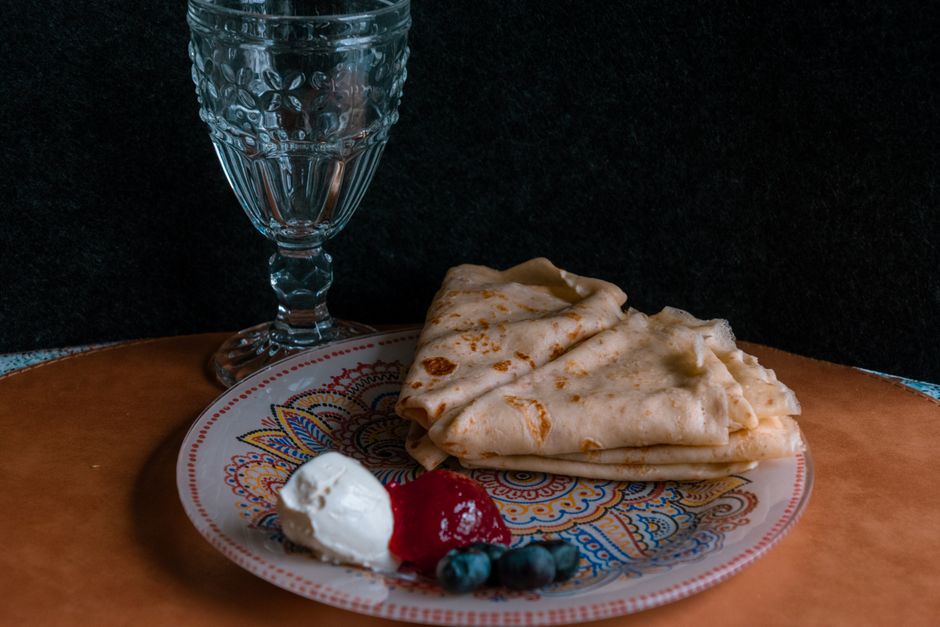
A crepe maker machine can make thin crepes easier to spread consistently, especially when its included spreader and adjustable heat match how you cook. Choose a griddle-style model for a flat cooking surface and straightforward spreading, or a dip-style model for a compact coating motion. For either type, preheat as directed, use the maker’s recommended batter amount, spread or dip promptly, and adjust heat after the first crepe.
Is a crepe maker machine better than using a crepe pan?
A crepe maker machine is useful when its dedicated surface, heat control, or included spreading tool makes your process easier to repeat; a pan is a practical choice if you already have one that releases crepes. There is no universal winner. The right choice depends on whether you value a purpose-built appliance enough to give it counter or cupboard space.
For occasional crepes, Serious Eats recommends a good-quality nonstick skillet rather than buying a dedicated crepe pan. Its method heats a 10-inch pan over medium heat for 2 minutes, lightly greases it, then pours excess batter back after coating the skillet. PBS’s demonstration also uses both a nonstick pan and a traditional low-sided crepe pan, and shows that an ordinary skillet or omelet pan can work if it releases the crepe.
A dedicated griddle-style maker changes the spreading step: instead of tilting a pan, you move batter across a flat surface with the supplied spreader. That can make the motion more repeatable, but it also adds an appliance to store and clean. A dip-style maker uses a different motion—briefly dipping its heated plate into batter—so it may suit someone who prefers coating the plate rather than steering a spreader.
Use the first crepe as a calibration run whichever tool you choose. PBS describes it as a test of batter thickness and pan temperature. If the crepe is too thick, the Escoffier School of Culinary Arts advises using less batter or thinning overly thick batter with a little water or milk.
What should I look for in a crepe maker machine for home use?
For home use, compare the heat control, cooking-surface size, spreading method, included tools, and storage features—and use published details rather than assuming a machine has features it does not list. Adjustable heat helps you correct browning; an included spreader can simplify a griddle-style model’s main technique. Surface dimensions and price are not published for every model below, so check the manufacturer’s listing before deciding whether a specific size or budget fits.
The Breville Traditional Crêpe Maker manual lists adjustable temperature control, a ready-to-cook light, a nonstick cooking surface, cord storage, and a batter spreader. The Hamilton Beach/Proctor Silex home model provides eight heat levels and includes a spreader, cup, and spatula. These are concrete conveniences to compare against the counter and storage space available in your kitchen.
For dip-style, the CucinaPro manual focuses on the dipping process rather than a spreader. Its instructions say to heat the plate, dip its edge into batter first, roll the surface to coat it, and keep the dip to no longer than three seconds. Holding it in batter longer changes thickness, so the technique rewards a short, consistent motion.
| Option | Who it suits | Cost | Key limitation |
|---|---|---|---|
| Breville griddle-style maker | Home cooks who want adjustable heat, a ready light, cord storage, and a supplied spreader | not published | Surface dimensions not published in the supplied source |
| Hamilton Beach/Proctor Silex griddle-style maker | Home cooks who want eight heat levels and supplied spreading and serving tools | not published | Surface dimensions not published in the supplied source |
| CucinaPro dip-style maker | Home cooks comfortable coating the heated plate by dipping and rolling | not published | Dipping time must be limited to no longer than three seconds |
| Nonstick skillet or crepe pan | Occasional crepe makers who already own a pan that releases crepes | not published | Requires a pour-and-tilt or pour-out technique |
Cooking times and amounts vary by model and method, so do not treat one manual’s numbers as universal. Breville suggests starting around heat setting 4 or 5 and using about 60–70 ml batter. Hamilton Beach specifies setting 4 as a starting point on its eight-level control, with 1/2 cup (118 ml) for a small crepe or 3/4 cup (177 ml) for a large one.
How do I spread batter evenly on an electric crepe maker?
To spread batter evenly on an electric crepe maker, preheat it according to its manual, add the specified amount, and move the spreader promptly with light, consistent pressure. On a dip-style machine, coat the heated plate in one brief dip and roll. In both cases, speed and a consistent motion matter more than repeatedly correcting areas already covered.
For a first batch on the Breville, start around setting 4 or 5, wait for the ready-to-cook indicator, add about 60–70 ml batter, then spread immediately in a uniform clockwise direction with slight downward pressure. The manual warns, “Don’t go over areas that have already been spread or your crêpe may rip.” That is the useful rule: complete the coating once, rather than chasing thin spots with extra passes.
- Preheat. Follow the indicator and heat guidance for your model. Hamilton Beach recommends starting at setting 4; adjust higher for browner crepes or lower for paler ones.
- Measure and pour. Use the amount specified for your surface and desired size. Hamilton Beach gives 118 ml for a small crepe and 177 ml for a large one; Breville’s amount is about 60–70 ml.
- Spread or dip promptly. On a griddle, move the supplied spreader quickly and evenly. On CucinaPro’s dip-style model, dip the edge first, roll to coat, and keep the dip to three seconds or less.
- Cook, flip, and assess. Breville lists about 60–90 seconds for the first side and about 60 seconds for the second. Hamilton Beach lists 1–2 minutes for the first side and about 1 additional minute after flipping, if desired. Use your manual’s timing; the first crepe tells you whether the heat and batter need adjustment.
Do not compare those appliance timings directly with every pan recipe. PBS’s demonstration takes about half a minute on the first side, while Serious Eats notes about 15 seconds in its skillet method. Those times belong to their particular demonstrations and methods. For batter texture, Escoffier describes a consistency like heavy cream and recommends resting the batter for at least 2 hours or overnight; strain it if lumpy.
If browning is uneven or too dark, make one adjustment at a time. Lower the heat if the crepe darkens too quickly; Hamilton Beach specifically identifies a control set too high as a cause of overly dark crepes. If the result is thick, first reduce the measured batter or adjust its consistency rather than making repeated spreader passes.
For electrical planning, consult the appliance’s own requirements and your kitchen setup; this related guide explains what kitchen appliances may need their own circuit.
Frequently Asked Questions
Why are my crepes sticking to the machine?
The surface may not be hot enough, or excess butter may interfere with batter adhering on a dip-style maker. Follow your model’s preheating instructions and use the first crepe to assess temperature and batter behavior. The CucinaPro manual also notes that holding the plate in batter longer changes thickness.
How do I clean a crepe maker without damaging its nonstick surface?
Unplug the machine and let it cool completely before wiping the surface. Follow the model’s manual: Breville recommends a clean cotton cloth, while Hamilton Beach specifies removing residue with a paper towel and then using a soft damp cloth before drying fully. Avoid abrasives, sharp objects, solvents, and immersion where the manual prohibits them.
Are dip-style crepe makers easier for beginners than griddle-style models?
Neither type is universally easier: dip-style uses a brief plate dip and roll, while griddle-style requires pouring and spreading batter across the surface. The CucinaPro manual limits dipping to no longer than three seconds, while griddle manuals emphasize quick, even spreading. Choose the motion you find easier to repeat and follow its specific instructions.
Sources
Keep reading
What Electrical Equipment Does a Home Kitchen Use, and Which Appliances Need Their Own Circuit?
Learn which kitchen appliances may need dedicated circuits, how to read labels and manuals, and how to spot an overloaded circuit.
Choose Garage Tool Storage That Fits Your Tools and Load
Choose garage storage by tool type, published capacity, footprint, anchoring needs, and the real limits of cabinet locks.
How Do You Choose Accessible Showers for Elderly Adults?
Choose accessible showers for elderly adults around mobility, safe entry, seating, support, reachable fixtures, and caregiver needs.
How Do You Store Towels in a Small Bathroom?
Choose compact towel storage for your bathroom's wall, door, and floor space while keeping used towels dry and humidity controlled.