
How Do You Store Towels in a Small Bathroom?
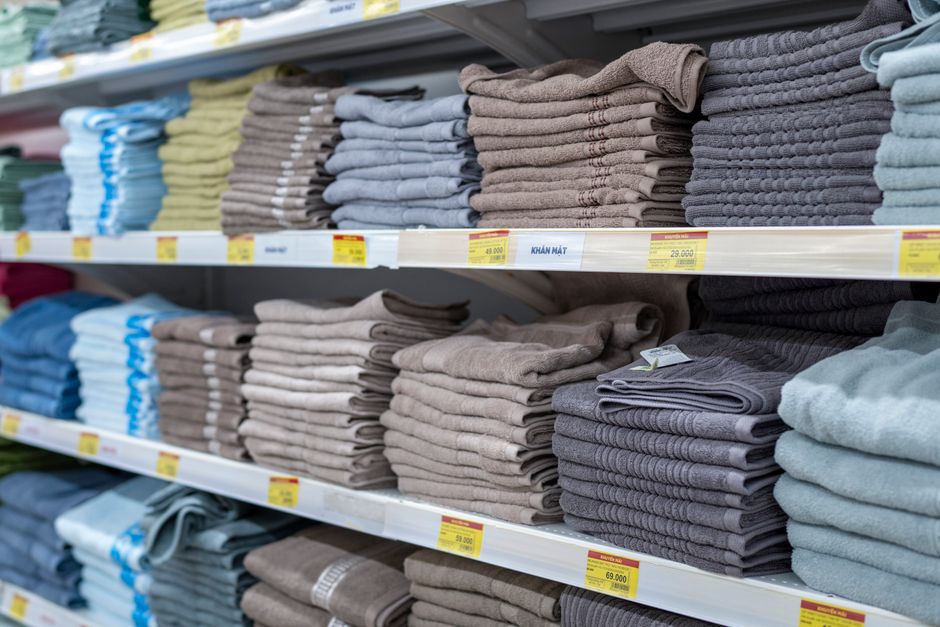
Store towels according to the space you actually have: use shelves or a rack on an open wall, hooks or a bar where floor space is unavailable, over-toilet storage only when it preserves clearance, and a freestanding unit only when it will not constrict the room. Then make drying, not storage volume, the deciding constraint: damp towels need ventilation and humidity control.
Where do you store bath towels if there is no linen closet?
Without a linen closet, divide the problem into two jobs: hold clean towels compactly, and give used towels room to dry. These jobs are often forced into one fixture, with poor results. A shallow wall shelf can hold folded clean towels; a nearby bar, hook rail, or rack can handle towels in use.
Start with the wall above the toilet, an unused side wall, or the back of the bathroom door. Above-toilet shelving is sensible only when it does not make the toilet area feel obstructed or interfere with access. The U.S. Access Board distinguishes shelves and coat hooks from larger obstructions in accessible toilet clearances. Its standards apply to accessible facilities, not every home bathroom, but the underlying lesson is sound: storage should occupy overlooked vertical space, not the route a person needs to use the room.
Where there is no credible wall location, a narrow freestanding unit is the remaining option. It earns its footprint only if the floor area is genuinely spare. Do not use freestanding storage to solve a wall-planning problem; in a small room, that merely transfers clutter from the wall to the walking path.
| Available space | Storage choice | Best use | Constraint to check |
|---|---|---|---|
| Open wall | Wall shelf plus bar or hooks | Separate clean-towel storage from drying | Keep the fixture out of the usable route |
| Back of door or narrow wall strip | Hooks or adhesive accessories | Used towels and lightweight bathroom items | Follow the stated load limit and installation instructions |
| Space above toilet | Wall-mounted shelf | Folded towels and toiletries | Preserve toilet-area clearance |
| Unused floor area | Freestanding rack or tower | When wall and door space are unavailable | Do not narrow access through the room |
How can I add towel storage without taking up floor space?
Add towel storage vertically or on the door; the floor is the least forgiving surface in a small bathroom. A wall-mounted shelf above a drying fixture separates inventory from use, while a hook rail uses a slim band of wall that would otherwise do nothing.
Renters and tile-averse homeowners have a defined no-drill route, but it is not an unlimited one. 3M Command says its water-resistant bath strips work on glass, mirror, tile, fiberglass, wood, and painted surfaces. The manufacturer lists medium and large replacement strips at 3 to 5 pounds and specifies a clean, dry surface followed by a one-hour wait before the hook or accessory is loaded.
That sequence matters. An adhesive hook is appropriate for the load its maker specifies, not a substitute for a structurally mounted shelf. Use it for a towel hook or a light accessory; reserve heavier folded-towel storage for a properly installed shelf when the wall and building conditions allow it.
There is a second constraint that storage catalogs rarely foreground: humidity. The U.S. Environmental Protection Agency states that indoor relative humidity should remain below 60%, ideally between 30% and 50%, and advises running a fan or opening a window while showering. A crowded hook rail in a damp, closed bathroom is storage in the narrow sense, but not a complete towel system.
Are hooks or towel bars better for drying towels?
Towel bars are the stronger default for drying because they let a towel spread out; hooks are the space-saving default when that wall width is unavailable. A ring can occupy an even smaller footprint, but the available sources do not provide a drying-performance comparison among bars, hooks, and rings. Heated racks are similarly outside the supplied evidence, so no claim about their drying speed is warranted here.
The relevant evidence concerns moisture and the condition of towels over time. A six-month study published in Scientific Reports followed towels in 26 households and found odor and dullness after two months of everyday use; it also observed biofilm structures over six months. The study associated towel microbiota with household factors including washing frequency and drying methods. The blunt implication is that a compact storage solution cannot compensate for a towel that remains damp.
Use a bar where possible, especially for the towel currently in use. Choose hooks when the alternative is no drying fixture at all, then space them so towels are not pressed into one damp mass. For either arrangement, reduce the humidity burden: the Pacific Northwest National Laboratory Building America Solution Center cites 50 cfm as the minimum intermittent mechanical-exhaust capacity and recommends leaving an intermittently controlled fan on for one hour after a shower. It also warns that bends, crushing, and poor duct installation can reduce actual airflow below the fan's factory rating.
A Practical Layout Rule
Plan the bathroom in this order: preserve access, assign a drying location, then add clean-towel capacity. This reverses the common instinct to buy the largest storage piece first. The room needs only as much towel storage as its wall, door, and floor constraints can support without compromising the first two requirements.
Finally, treat persistent dampness as a moisture-control issue rather than a towel-accessory issue. The Centers for Disease Control and Prevention recommends keeping home humidity no higher than 50% throughout the day and using kitchen and bathroom exhaust fans that vent outdoors. The EPA's formulation is more concise: “The key to mold control is moisture control.”
Frequently Asked Questions
What can I use instead of drilling into bathroom tile?
Water-resistant adhesive hooks and accessories are the clearest no-drill option covered by the available product guidance. 3M Command states that its bath strips work on clean, dry glass, mirror, tile, fiberglass, wood, and painted surfaces; its medium and large replacement strips are listed for 3 to 5 pounds, and the instructions call for waiting one hour before loading.
How do I keep towels from smelling damp in a small bathroom?
Treat moisture as the governing problem: spread towels so air can reach them, run an exhaust fan or open a window while showering, and keep humidity low. The EPA recommends indoor relative humidity below 60%, ideally 30% to 50%, while the CDC recommends no higher than 50% throughout the day; PNNL recommends leaving an intermittently controlled fan running for one hour after a shower.
Can towels be stored above a toilet safely?
Yes, provided the shelf or rack is securely installed and does not turn the toilet area into a clearance problem. The U.S. Access Board permits shelves and coat hooks to overlap required water-closet clearance in accessible facilities, while other fixtures and obstructions cannot; for a home bathroom, this is useful clearance guidance rather than a universal residential rule.
Sources
- U.S. Environmental Protection Agency: A Brief Guide to Mold, Moisture and Your Home
- Pacific Northwest National Laboratory: Bathroom Exhaust Fans
- U.S. Access Board: ADA Standards, Chapter 6
- Scientific Reports: Longitudinal study of household towels
- 3M Command: Water-Resistant Bath Strips
- Centers for Disease Control and Prevention: Mold