
Can Solar Power Turn Brackish Groundwater Into Drinking Water?
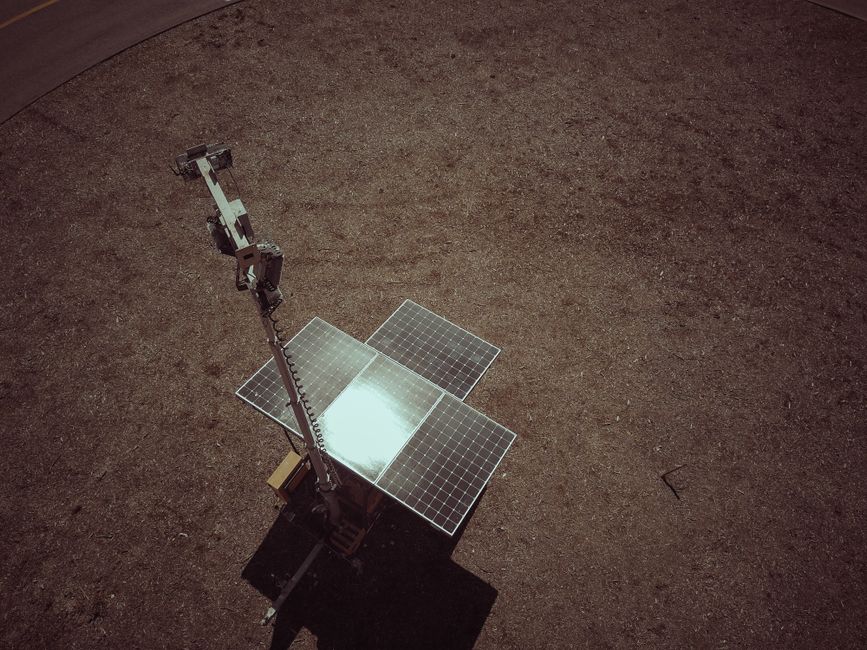
Yes. Solar-powered reverse osmosis or electrodialysis can reduce dissolved salts in brackish groundwater, with reported energy use depending on salinity, system design and other operating conditions. A Bureau of Reclamation field test produced about 400 gallons a day without a battery, while a separate electrodialysis prototype produced about 100 gallons a day with batteries. Salt removal alone does not make water microbiologically safe, so testing and any needed disinfection remain essential.
Can solar power run a water desalination system?
Yes, solar power can run desalination equipment, but the design determines how it handles changing sunlight. The U.S. Bureau of Reclamation field-tested a photovoltaic reverse-osmosis system in Mesquite, Nevada, for three months without an inverter or battery. A variable-flow pump adjusted to the solar power available, so the system could operate as supply changed.
That trial treated groundwater with 3,500 mg/L total dissolved solids (TDS) to about 100 mg/L TDS. At 40–50% water recovery, it produced approximately 400 gallons a day and used 1.38 kWh per cubic meter of product water. Those are results from one system and one test, not a universal output or energy guarantee. The trial also encountered calcium sulfate scaling, a concrete reminder that feed-water chemistry affects uptime.
Electrodialysis offers a different operating trade-off. A separate Reclamation prototype used batteries, pumps, sensors and controls to regulate power and product-water parameters. It produced about 100 gallons (400 liters) per day and was described as enough for one household's daily consumption. Unlike reverse osmosis, electrodialysis does not use the same high pressures and can adjust flow to available energy.
For groundwater below 10,000 mg/L TDS, a Reclamation and MIT review reports literature ranges of 0.26–3 kWh/m³ for reverse osmosis and 0.5–7 kWh/m³ for electrodialysis. For lower-salinity groundwater at 1,000–5,000 mg/L, it reports 0.5–5.5 kWh/m³ for electrodialysis, with some recent sources reporting 0.5–1.8 kWh/m³. The ranges overlap; they are not a simple promise that one technology always uses less energy.
| Option or example | Reported figure | How to interpret it |
|---|---|---|
| Reverse osmosis field test | 1.38 kWh/m³; about 400 gallons/day | Specific to the tested system, feed water and 40–50% recovery. |
| Electrodialysis prototype | About 100 gallons/day | A battery-equipped prototype; not a universal production rate. |
| Reverse osmosis literature, groundwater below 10,000 mg/L TDS | 0.26–3 kWh/m³ | Reported range; actual demand depends on operating conditions. |
| Electrodialysis literature, groundwater below 10,000 mg/L TDS | 0.5–7 kWh/m³ | Reported range that varies with salinity and system conditions. |
Sunlight variation is a system-design issue, not a small footnote. A battery can store energy for later use, as in the electrodialysis prototype; a flexible pump or process can instead adapt production to available power. The right comparison includes groundwater pumping and conveyance as well as desalination itself. The review identifies feed salinity and temperature, system size and design, fouling, pretreatment and pumping as factors in energy use. See the U.S. Bureau of Reclamation and MIT review of desalination technologies before treating a headline energy number as a project estimate.
Can brackish well water be made safe to drink?
Yes, brackish well water can be treated to reduce dissolved salts, but a low TDS result alone does not establish that it is safe to drink. The treatment must match the water's actual contaminants, and the finished water needs appropriate testing.
The distinction matters because wells can have microbial or chemical concerns that salt removal does not resolve. The U.S. Environmental Protection Agency recommends that private well owners test annually for total coliform bacteria, nitrates, TDS and pH, and also test for contaminants suspected locally. Use a certified laboratory and consult public-health authorities if a contaminant exceeds health standards.
Start with the test, then choose treatment. A TDS measurement helps describe dissolved material; it is not a complete safety certificate. The EPA's guidance on protecting private-well water provides a practical baseline for what to test and what to do when results exceed health standards.
Recovery also affects how much treated water a system delivers. In the reverse-osmosis trial, 40–50% recovery means that the product-water portion was not the full volume of feed water processed. In planning, account for both the desired daily amount and the water left as concentrated reject stream; the supplied trial figures do not specify a universal disposal design for every site.
Does desalination remove bacteria as well as salt?
No—do not treat salt removal as proof of disinfection. Desalination is directed at dissolved salts, while bacterial contamination calls for a microbial treatment step and verification through testing.
The EPA identifies chlorine, ozone and ultraviolet light as disinfection methods for bacterial contamination. Which approach is appropriate depends on test results and the overall water system; the available sources do not establish a one-size-fits-all disinfection design for every solar installation. Test the source and finished water rather than assuming that a desalination unit addresses every hazard.
Deployment has mechanical as well as water-quality limits. The reverse-osmosis field test encountered calcium sulfate scaling. The Department of Energy also identifies scaling and corrosion as challenges for solar-thermal desalination research, while describing thermal collection and storage as ways to improve dispatchability and portability. Those program goals are research and development aims, not a guarantee of commercial performance.
For a remote home or community, a workable plan therefore needs more than panels and a membrane or electrodialysis stack. It needs a reliable source-water profile, appropriate pretreatment and disinfection where required, a plan for operating through low-sun periods, and the ability to inspect, clean and replace parts. If no one locally can diagnose scaling, fouling or a failed sensor, theoretical production capacity will not translate into dependable drinking water.
Frequently Asked Questions
Is solar desalination practical for a village or remote home?
It can be practical where the groundwater is suitable for the selected process and the system can be maintained. Solar-powered prototypes have treated brackish water at household-relevant scales, but scaling, fouling, water testing, replacement parts and local operating capacity need to be planned for.
How much water can a small off-grid desalination system produce?
Reported examples vary: a photovoltaic reverse-osmosis field system produced approximately 400 gallons per day, while a photovoltaic electrodialysis prototype produced about 100 gallons per day. These are results from specific systems, not guaranteed outputs; feed-water conditions, design and available energy affect production.
Before selecting a system, write down three numbers from your own project: tested feed-water TDS and other contaminants, required daily product-water volume, and the energy available across changing sunlight. Then check who will test the water and maintain the equipment. That short list exposes the central trade-offs before equipment choices are locked in.
Sources
- U.S. Bureau of Reclamation, Photovoltaic Reverse Osmosis Desalination System
- U.S. Bureau of Reclamation, Development of Photovoltaic Electrodialysis Desalination System
- U.S. Bureau of Reclamation and Massachusetts Institute of Technology, Tailoring Advanced Desalination Technologies for 21st Century Agriculture
- U.S. Environmental Protection Agency, Protect Your Home's Water
- U.S. Department of Energy, Solar Desalination
Keep reading

How Do Common Physical Traits Get Inherited?
Learn how many genes, shuffled inheritance, and environmental influences shape traits such as eye color and height.
Can a Small Wind Turbine Produce Enough Electricity at My Home?
Estimate a small wind turbine’s output at your property, assess wind and obstacles, and compare installed costs with solar before you invest.
Why Is Shoulder Pain So Common, and What Do Studies Really Show?
A research-based guide to shoulder-pain prevalence, age and sex patterns, work exposures, and why scans cannot diagnose pain alone.

Can I Trust a Clinical-Study Headline for My Health Decision?
A practical framework for judging whether a clinical-study headline is reliable and relevant to your health decision.